Overview
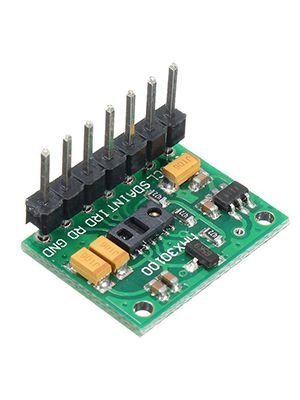
The MAX30102 is a state-of-the-art pulse oximeter and heart rate sensor that utilizes advanced optical technology to measure the oxygen saturation of the blood and the heart rate. This sensor is designed for easy integration into various electronic projects, making it a popular choice among hobbyists and professionals alike.
What's in the box
- MAX30102 Pulse Oximeter Sensor Module
- Connecting Wires
- Datasheet
Key features
- High-precision heart rate measurement
- Blood oxygen saturation level monitoring
- Low power consumption
- Compact design for easy integration
- I2C communication interface
- Integrated LED drivers
- Supports various microcontrollers
How it works
The MAX30102 uses photoplethysmography (PPG) to detect blood volume changes in the microvascular bed of tissue. It emits light through the skin and measures the amount of light that is absorbed by the blood. By analyzing the variations in light absorption, the sensor can calculate the heart rate and blood oxygen saturation levels.
Getting started
- Connect the MAX30102 sensor to your microcontroller using the provided wires.
- Install the necessary libraries for your development environment (e.g., Arduino IDE).
- Upload the example code to your microcontroller to start reading data.
- Open the serial monitor to view the heart rate and oxygen saturation readings.
- Experiment with different configurations and settings to optimize performance.
Wiring / connections
To connect the MAX30102 to your microcontroller, follow these pin connections:
- VCC to 3.3V
- GND to Ground
- SDA to I2C Data Pin
- SCL to I2C Clock Pin
Tips & troubleshooting
- Ensure proper connections to avoid data errors.
- Check the power supply voltage; the sensor operates at 3.3V.
- Use a pull-up resistor on the I2C lines if necessary.
- Make sure the sensor is placed correctly on the skin for accurate readings.
Safety notes
Always handle the sensor with care and avoid exposing it to moisture or extreme temperatures. Ensure that the device is powered off when making connections to prevent damage.